Get our FREE E-Book HERE - 120 TIPS for Losing Weight & Bonus Tips for Postpartum Weight Loss & Dad’s Postpartum Experience

Sleep and Weight Loss: The Surprising Connection

Did you know that one-third of Americans don’t get enough sleep? This fact shows a strong link between not sleeping enough and gaining weight. It’s key to managing your weight. Studies reveal that not sleeping well can mess with your hormones, make you hungrier, lower your energy, and lead to bad food choices. Fixing your sleep problems is vital for staying at a healthy weight.
Key Takeaways
- Not sleeping enough is linked to more obesity and a higher BMI.
- Not getting enough sleep can cause hormonal imbalances, more hunger, and less energy, making losing weight harder.
- Keeping a regular sleep schedule can help improve sleep quality and aid in losing weight.
- Long-term lack of sleep raises the risk of chronic health issues, like heart disease and diabetes.
- Fixing sleep issues is a key part of a good plan for managing weight.
The Hormonal Link Between Sleep and Weight
Sleep and weight management are closely linked by hormones. Leptin and ghrelin, two key hormones that control appetite, are deeply affected by sleep quality and amount.
Not sleeping well lowers leptin, the “satiety hormone.” It tells your brain you’re full. At the same time, ghrelin, the “hunger hormone,” goes up. This mix makes it hard to keep a healthy weight or follow a calorie deficit without good sleep.
How Sleep Deprivation Affects Leptin and Ghrelin
Not sleeping enough changes these important hormones. People who sleep less than seven hours are more likely to be overweight or obese. Each lost hour of sleep raises the risk of type 2 diabetes by 14%.
The Role of Cortisol in Weight Gain
Sleep loss also increases cortisol, a stress hormone. It can mess with insulin and help store fat, especially around the belly. This makes losing weight or keeping a healthy body shape hard without enough sleep.
The link between sleep, leptin, ghrelin, and cortisol shows why sleep is key for metabolism and weight control. Knowing this can help you improve your sleep and support weight loss.
“Sleep loss is associated with growth hormone deficiency and elevated cortisol levels, both linked to obesity.”
Why Lack of Sleep Leads to Overeating
Not getting enough sleep can really affect how much you eat and your weight. It messes with your body’s hormonal balance, making you want more food and eat too much.
The Impact of Fatigue on Food Choices
Being tired from not sleeping enough makes you hungrier and less able to control your food choices. It also affects your brain, making you eat more out of emotions and crave unhealthy foods. Plus, being tired makes it tough to stay on a healthy diet.
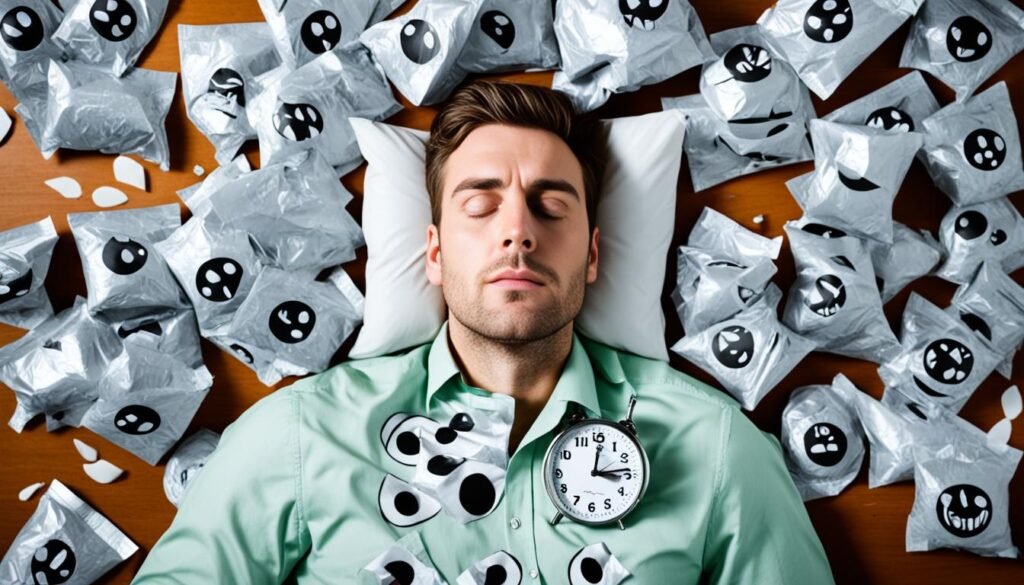
“Insufficient sleep impacts total daily energy expenditure, food intake, and weight gain.”
When you’re not well-rested, unhealthy foods seem more tempting because your brain’s reward system is stronger. This can cause you to eat too much and gain weight, starting a bad cycle.
- Lack of sleep makes you hungrier and more likely to eat too much of the wrong foods.
- Not sleeping well affects your brain, making you eat more because of emotions.
- Being tired makes it harder to stick to a healthy diet.
Knowing how sleep affects your eating can help you sleep better and eat healthier. This can lead to a healthier life.
Sleep and Weight Loss
Getting to a healthy weight often means looking at many factors, including sleep. Not sleeping well can lead to gaining weight and obesity. It messes with the hormones that control hunger, fullness, and metabolism. This makes losing weight hard.
Studies show that how much and how well you sleep affects your weight. Americans sleep less now than before, and they don’t feel as rested. This change in sleep habits has led to more people being overweight, as good sleep is linked to a healthy weight.
Sleep affects weight mainly by causing hormonal imbalances. Men who slept only 4 hours had more hunger hormone and less fullness hormone than those sleeping 10 hours. Not sleeping well can also mess up metabolism, increase stress, make it harder to handle sugar, and cause insulin resistance. All these can lead to gaining weight.
Sleep’s impact on weight is seen across all ages. Kids and teens who don’t sleep enough are more likely to be overweight. Adults sleeping less than 6 hours a night are more likely to be obese.
Fixing sleep problems is key to managing weight well. Losing sleep while trying to lose weight can make it harder to lose weight and may lead to eating more. Being exposed to artificial light at night can also make you gain weight and become obese. Good sleep helps control hormones, energy, and health, making it easier to reach weight loss goals.
“Insufficient sleep leads to increased cravings for energy-dense, high-carbohydrate foods.”
– Research finding
Creating a Sleep-Friendly Environment
Creating a sleep-friendly space is key to getting quality sleep and losing weight. Making small changes to your sleep habits can help. This makes it easier for your body and mind to relax, leading to better sleep.
Tips for Optimizing Your Bedroom for Better Sleep
Start by keeping a regular sleep schedule, even on weekends. This helps your body’s internal clock stay in sync. Before bed, try relaxing activities like taking a warm shower or putting on comfy pajamas.
Reduce blue light from devices before bed. Devices like phones and computers can mess with your sleep. Try to stop using screens a few hours before bed.
Stay away from caffeine, alcohol, and big meals before bed. Instead, enjoy calming activities like reading or listening to soft music.
 Use blackout curtains or an eye mask for light, and earplugs or a white noise machine for noise.
By making your bedroom sleep-friendly and following these tips, you can better your sleep habits. This supports your weight loss efforts. Remember, good sleep is key to a healthy life and boosts your overall well-being.
The Sleep-Metabolism Connection
Sleep is key to keeping your metabolism and energy levels in check. Not getting enough sleep can slow down your metabolism, making it tough to burn calories and shed pounds. It also makes you feel tired, which can lower your motivation and energy for staying active. Good sleep habits help your body’s natural rhythms and metabolism, which is good for managing your weight.
Research shows that not sleeping well can mess with how you control your hunger, leading to eating more and gaining weight. In a study, 80 young, overweight people who slept less than 6.5 hours a night started sleeping 1.2 hours more each night. This change cut their daily calorie intake by about 270 calories. Some even ate 500 fewer calories a day.
Keeping up this extra sleep could lead to losing around 12 kg or 26 lbs over three years. Getting enough sleep at night means eating less during the day, about 270 calories less than those who don’t sleep well. Over three years, this could mean losing 26 pounds.
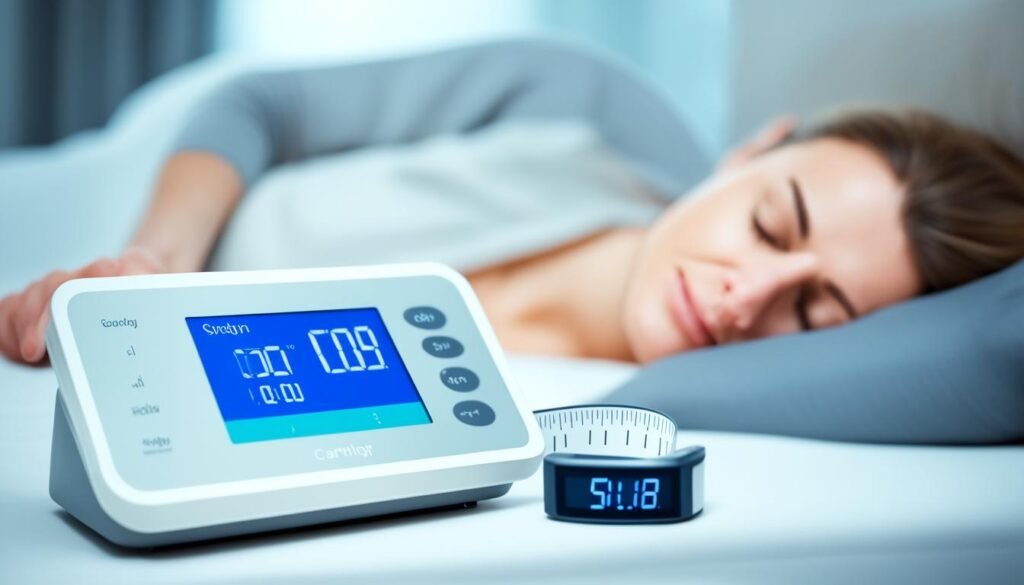
Those who got sleep advice slept more and ate 500 fewer calories a day. They lost about 1 pound, while the control group gained almost a pound.
Keeping a good sleep-metabolism balance is key for your health and weight goals. By focusing on quality sleep and good sleep habits, you help your metabolism and boost your chances of losing weight.
Sleep Disorders and Their Effect on Weight
Sleep disorders, like sleep apnea, can greatly affect your weight and health. Sleep apnea is when you stop breathing many times while sleeping. It’s linked to being overweight and can make you gain weight.
Fixing sleep disorders is key to staying at a healthy weight. It helps balance your hormones, improves sleep, and lowers the risk of other health problems.
Understanding Sleep Apnea and Its Impact
Sleep apnea is a common issue that can harm your health, including your weight. People with it have breaks in their breathing at night. This leads to poor sleep and feeling tired during the day.
This bad sleep can mess with your body’s balance of hormones. It can make you hungrier, slow down your metabolism, and make it harder to control your weight.
Those with sleep apnea often have blood oxygen levels below 90%, which is not healthy. In bad cases, levels can drop into the 70s, causing serious health issues. This lack of oxygen can make you feel confused, dizzy, have high blood pressure, headaches, and feel very tired.
Being overweight can make sleep apnea worse, creating a bad cycle. Being overweight means you breathe in less oxygen and can’t get rid of CO2 well. This leads to a buildup of CO2 in the blood, which can cause serious problems if not treated.
This mix of sleep issues, not enough oxygen, CO2 buildup, and poor sleep can make you feel very tired and make breathing hard. This can lead to gaining weight and other health problems. Fixing sleep disorders like sleep apnea is key to stopping this cycle and improving your health.
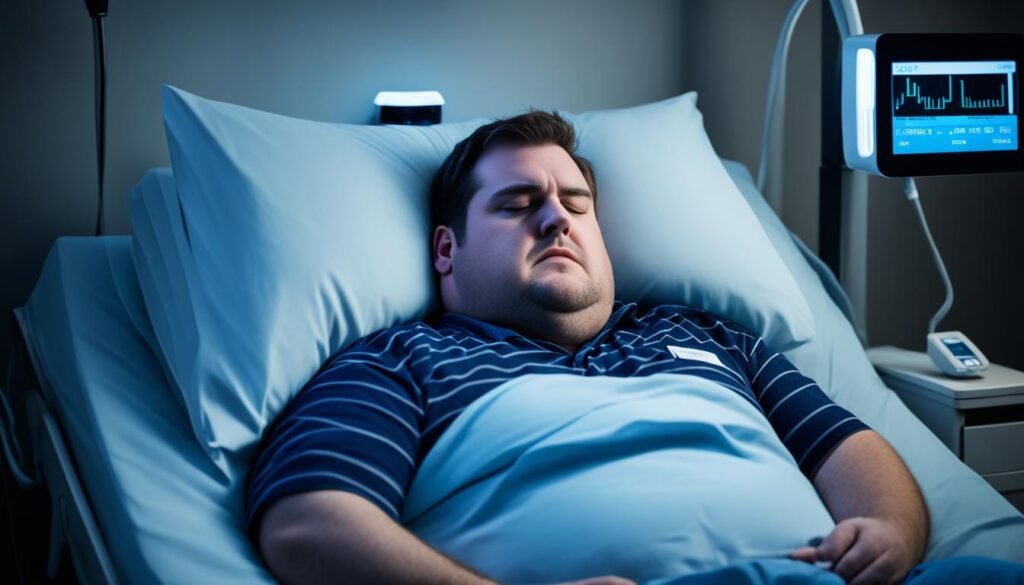
Studies show that bad sleep can change your hormones, making you want to eat more and gain weight. Also, not sleeping well or sleeping too little can increase your risk of obesity, high cholesterol, high blood pressure, and other health issues.
If you’re having trouble sleeping or dealing with weight issues, talk to a doctor. They can help you make a plan to fix these problems and improve your health. Getting better sleep and fixing sleep disorders can help you keep a healthy weight.
Conclusion
The link between sleep and weight loss is clear. Getting good, steady sleep is key to managing your weight well. By fixing sleep problems and making your bedroom sleep-friendly, you can balance your hormones, speed up your metabolism, and choose healthier foods. These steps can greatly help you reach your weight loss goals and improve your overall health.
Getting enough sleep is vital for a healthy life. Research shows that good sleep helps you lose weight and keep a healthy body shape. On the other hand, bad sleep can lead to more obesity. Adding sleep tips to your daily life can be a big help in managing your weight.
Putting sleep first and making your sleep area supportive can help you make the most of your weight loss efforts. It’s a key part of a lasting, healthy lifestyle. Don’t overlook the importance of sleep in managing your weight and health.
Source Links
- The Sleep & Weight Loss Connection | OBGYN Associates of AL – https://obgynal.com/the-surprising-connection-between-sleep-and-weight-loss/
- The surprising connection between sleep and weight management – https://www.uclahealth.org/news/article/surprising-connection-between-sleep-and-weight-management
- Sleep and Weight: Is There a Connection? – https://www.ncoa.org/adviser/sleep/sleep-and-weight-loss/
- Obesity and Sleep – https://www.sleepfoundation.org/physical-health/obesity-and-sleep
- Associations between sleep loss and increased risk of obesity and diabetes – https://www.ncbi.nlm.nih.gov/pmc/articles/PMC4394987/
- Sleep Deprivation: Effects on Weight Loss and Weight Loss Maintenance – https://www.ncbi.nlm.nih.gov/pmc/articles/PMC9031614/
- Sleep and Overeating – https://www.sleepfoundation.org/physical-health/sleep-and-overeating
- Sleep, Obesity and How They Are Related – https://www.lifespan.org/lifespan-living/sleep-obesity-and-how-they-are-related
- Sleep and Weight Loss – https://www.sleepfoundation.org/physical-health/weight-loss-and-sleep
- 6 Ways Sleep May Help You Lose Weight – https://www.healthline.com/nutrition/sleep-and-weight-loss
- Does Sleep Affect Weight Loss? – https://www.webmd.com/diet/sleep-and-weight-loss
- Creating a Sleep Routine – 6 Steps to Better Sleep – https://hr.wustl.edu/creating-a-sleep-routine-6-steps-to-better-sleep/
- The Crucial Link Between Sleep and Weight Loss: Unveiling the Impact on Your Wellness Journey – https://premiumhealth.us/is-sleep-impacting-your-weight-loss-efforts/
- Nutrition and Sleep: Diet’s Effect on Sleep – https://www.sleepfoundation.org/nutrition
- Sleep and Metabolism: An Overview – https://www.ncbi.nlm.nih.gov/pmc/articles/PMC2929498/
- Getting more sleep reduces caloric intake, a game changer for weight loss programs – UChicago Medicine – https://www.uchicagomedicine.org/forefront/research-and-discoveries-articles/2022/february/getting-more-sleep-reduces-caloric-intake
- Getting enough sleep can help you eat less — a ‘game changer’ for weight loss – https://www.today.com/health/mind-body/sleep-weight-loss-rcna16287
- Sleep disorders and obesity: A vicious cycle | Diet and Nutrition | Prevention | UT Southwestern Medical Center – https://utswmed.org/medblog/obesity-sleep-disorders/
- Extent and Health Consequences of Chronic Sleep Loss and Sleep Disorders – Sleep Disorders and Sleep Deprivation – https://www.ncbi.nlm.nih.gov/books/NBK19961/
- Why poor sleep could derail your weight loss goals | HCA Florida – https://www.hcafloridahealthcare.com/healthy-living/blog/why-poor-sleep-could-derail-your-weight-loss-goals
- The association between sleep health and weight change during a 12-month behavioral weight loss intervention – https://www.ncbi.nlm.nih.gov/pmc/articles/PMC7914147/
- Sleep – https://www.hsph.harvard.edu/obesity-prevention-source/obesity-causes/sleep-and-obesity/
- Poor sleep may hinder weight loss, study shows – https://www.medicalnewstoday.com/articles/325629